Category Archives: Newsletter

NCC News Bite – February 2026


This edition contains the following articles:

Coming in NDSR 2026


We hope you have been enjoying the new foods, nutrients, and features of NDSR 2025 and the 2025 NCC Food and Nutrient Database. In the meantime we have been hard at work on NDSR 2026 and the 2026 Food and Nutrient Database, which we expect to release in late summer 2026. 


NDSR 2026 will include a frequently requested feature—a Healthy Eating Index (HEI) output file that provides HEI total and component scores across records, using the same calculation as the HEI Across Records Report.  In the 2026 Food and Nutrient Database, you’ll see many updates to foods in the database including updates to chips and other snack foods, soups, and Enfamil and store brand infant formulas.     


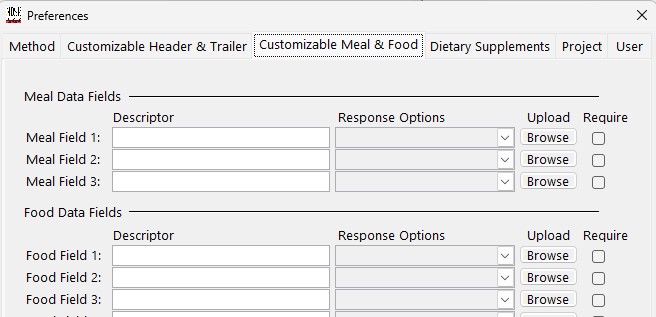
Notice of Bug in NDSR 2024 and NDSR 2025 When Using Multiple Customizable Meal or Food Fields


We have discovered an output file bug in NDSR 2024 and NDSR 2025 with the Customizable Data Fields for foods and meals.  If you do not use the customizable meal and food data fields, or if you only use one of each customizable field at the food or meal level, then your data will not be impacted by this bug.


If you are using more than one customizable field for foods or meals, the data for the customizable fields may be displayed out of order in your output files.  You may not notice that the responses are in a different order, especially if the response options are the same for one or more questions.  However, please note the customizable field descriptors are correctly aligned with the responses in the output files, so you can look at the field descriptor columns to determine if the order of your data has been affected. Let us know if you have questions about whether or not this bug could be affecting your work by emailing us at NDSRhelp@umn.edu


We are working on a new release of NDSR 2025 that will be sent to the primary contact for each group licensing NDSR 2025 as soon as it is ready.  If you aren’t the primary contact for your institution and you utilize more than one customizable field at the food and meal levels, you may want to let them know to watch for an email from NCC in the coming weeks.  If you have a time sensitive need for your data to be rerun in the fixed version, reach out to NDSRhelp@umn.edu as we may be able to generate the output files for you in the meantime.  Clients using more than one customizable field for foods or meals who were using NDSR 2024 but do not have a current license for NDSR 2025 should also contact NDSRhelp@umn.edu.
 

Join Us at the National Nutrient Databank Conference (NNDC) in April!


Dr. Lisa Harnack, NCC’s Director, and Dr. Bhas Jasthi, one of our Database Scientists, will be at the NNDC conference being held in Washington DC in April.  We have submitted abstracts and hope to be either giving a presentation or sharing a poster there.  Registration for the NNDC conference is now open!


NDSR Training: Now Available with Part Asynchronous Content


In case you missed our announcement in November, we wanted to let you know that we’ve changed our NDSR Training format. Now we have two training options—an asynchronous training course, and an option to complete the asynchronous training plus a four-hour live interviewing practice session on Zoom.  The asynchronous course alone may be a good option for anyone who wants to learn about NDSR but won’t be collecting 24-hour dietary recalls themselves (e.g., PIs, coordinators, and supervisors as well as anyone that will be using the software for menu planning, recipe analysis, or food record entry).  The asynchronous course plus the live interviewing practice workshop is recommended for those who will be using NDSR to collect 24-hour dietary recalls, conduct Quality Assurance, or just want a deeper understanding of how NDSR works. 


Please see our Training and Certification page for more information.  Registration is now open, and we recommend that you register 1-2 weeks ahead of when you want to start the asynchronous course to ensure that you have access to the course and other training materials.  Questions? Contact NDSRtraining@umn.edu


New Foods


The following new foods are available with this edition of the NCC News Bite. A New Foods Backup File is available for download on our website under New Food Backup Files, “February 2026”.

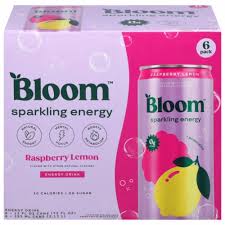
  • Bloom Nutrition Sparkling Energy Drink – Raspberry Lemon
  • Celsius Sparkling Energy Drink – Strawberry Passionfruit
  • Cheerios Protein Cereal – Strawberry
  • Cheerios Veggie Blends Cereal – Apple Strawberry
  • Fairlife Nutrition Plan 30g Protein Shake – Chocolate
  • Kodiak Protein Packed Chewy Granola Bar – Chocolate Chip
  • Perfect High Protein Bar – Chocolate Chip Cookie Dough
  • Starbucks Refresher – Strawberry Acai

NCC News Bite – November 2025

pumpkin roll
 

This edition contains the following articles:


NEW NDSR Training Format and Options!


We are excited to announce a new format for our NDSR Training program.  For many years, our training has consisted of a live, two-day workshop, initially held in-person here in Minneapolis, MN, and more recently held via Zoom.  Now we have two training options—an asynchronous training course, and an option to complete the asynchronous training plus a four-hour live interviewing practice session on Zoom.  The asynchronous course alone may be a good option for anyone who wants to learn about NDSR but won’t be collecting 24-hour dietary recalls themselves (e.g., PIs, coordinators, and supervisors as well as anyone that will be using the software for menu planning, recipe analysis, or food record entry).  The asynchronous course plus the live interviewing practice workshop is recommended for those who will be using NDSR to collect 24-hour dietary recalls, conduct Quality Assurance, or just want a deeper understanding of how NDSR works.  It can be challenging to commit two full business days in a row to a training, so we expect that the new asynchronous format will make it easier for interested individuals to access the training program.  The live interviewing practice workshops will be conducted in small group format several times throughout the year.  Please see our Training and Certification page for more information.  Registration is now open, and we recommend that you register 1-2 weeks ahead of when you want to start the asynchronous course to ensure that you have access to the course and other training materials.  Questions? Contact NDSRtraining@umn.edu.


e-learning


Website Pages to Orient You and Your Analyst to the Content of NDSR Output Files


We know that the wealth of data available in the many NDSR output files may appear daunting or confusing at first. Chapter 8 of the NDSR User Manual provides an overview of NDSR output and File Specifications. However, those who haven’t analyzed dietary data before may need more help in getting started. To meet this need, we provide an orientation to the content of the NDSR output files on our website.  In addition to providing an easy-to-understand description of the content of output files, helpful tips are included along with answers to many common questions about data in the output files. We hope you find this useful, and we welcome ideas for improving this website content.


Directions


HEI calculations in NDSR


From our most recent client survey, we heard that some of you have questions about HEI calculations using NDSR.  Here are two of the most common questions that came up along with their answers.


Question: I have dietary data in versions of NDSR prior to when the HEI output files were available. How can I calculate HEI scores for this data?


Answer: Good news! Projects that were created in NDSR 2013 or a subsequent version of the program using the record types of Recall, Record, and Record-assisted Recall may be restored in NDSR 2025 to obtain HEI 2015 output files. All editing of foods and amounts entered into these record types must be done in the database version used to create them, so make sure to complete all editing of foods and amounts before restoring intake record projects to NDSR 2025.


Once the project has been restored into NDSR 2025, the HEI project and record reports and HEI output files may be generated.  You can generate the HEI reports and the output files on the project as you restored it, or you can move some or all of the records from the restored project into another project to combine them with records generated in other versions of NDSR.  For more information on backing up projects and restoring projects into a newer version of NDSR, see Chapter 9 in the NDSR User Manual or the FAQ on our website under the heading Tips using NDSR.


If you have data in NDSR 2012 or earlier version of the program, check out the legacy SAS code on our website for HEI calculations.


Question: We want to generate HEI 2020 scores, but NDSR reports and output files are for HEI 2015. Could you update this?


Answer: The working group tasked with updating the HEI to align with the 2020-2025 Dietary Guidelines for Americans determined that no changes to the index were required aside from updating the name to ‘HEI 2020’.  Consequently you can use NDSR HEI 2015 output files for HEI 2020 scores for dietary intake data and/or menus in NDSR.  The HEI 2020 has the same index components and scoring criteria as the HEI 2015, so while the HEI output files and reports in NDSR are labeled as HEI 2015, they are the same as HEI 2020 scores.    


If you would like to learn more about HEI and NDSR, you can reference our website and Appendix 24 of the NDSR User Manual.  You can also feel free to reach out to our User Support at NDSRhelp@umn.edu.


HEI logo

NCC News Bite – June 2025

parfait


This edition contains the following articles:


Coming Soon: Heme & Non-Heme Iron, Percent Calories from Added Sugars, and Updated and New Foods in the 2025 version of the NCC Food and Nutrient Database and NDSR
 

We anticipate releasing the 2025 versions of the NCC Database and NDSR later this summer, and both now include heme and non-heme iron thanks to funding from the National Cattlemen’s Beef Association to support this work. In response to your requests, we have also added Percent Calories from Added Sugars.


We let you know in our last News Bite that baby foods and infant formulas have been updated for the 2025 versions of the NCC Database and NDSR.  Meat alternative products from the following popular brands have also been updated:

  • Beyond
  • Gardein
  • Good Catch
  • Impossible
  • MorningStar
  • Quorn
  • Tofurky
  • Worthington Plant Powered

In addition to updates to the existing database, our team has added a variety of new foods including carnitas, barbacoa, kalbi, African peanut soup, aloo palak, candied ginger, Liberian check rice, massaman curry, mixed berries, stuffed pork chop, and Szechuan beef.


As a reminder, the latest version of NDSR is included as a component of your annual NDSR support. Any clients with up-to-date support at the time of the NDSR 2025 release will receive access to the updated software. Not sure of your support status or want to reinstate your support for another year? Send us an email at NDSRhelp@umn.edu to learn more!


For our NCC Food and Nutrient Database Licensing clients, those with an agreement for the 2025 files will receive an invoice in the coming weeks unless you have pre-paid. Files will be sent per your licensing agreement. Any questions can be directed to your licensing contact or NDSRhelp@umn.edu. 


Coming soon on a slate


Using NDSR to Assess Ultra-Processed Food Intake
 

We have heard from some of you that you are interested in identifying ultra-processed foods in your dietary data so that you can assess level of intake of foods considered ultra-processed according to the NOVA classification system.  While NDSR does not classify foods into NOVA classified categories, researchers can carry out this type of classification of foods entered into NDSR dietary recalls, records, or menus.  One way to do this with your NDSR output data files is to identify the unique food IDs in output file 02 and then assign a classification level to each food based on resources such as the NCC Database Food Group ID and ingredient statements for restaurant and packaged foods.  If you are interested in more details on this potential approach for classifying foods in your NDSR dietary data, see the corresponding FAQ on the NCC website.


Ultra processed foods

Caution in Using Individual Nutrients (NTRNs) in NDSR
 

It has come to our attention recently that some NDSR users are adding or subtracting individual nutrients (NTRNs) to User Recipes in NDSR. This is being done to create User Recipes for commercial products that match the Nutrition Facts panel. We advise against doing this for the reason described in the paragraph that follows. 


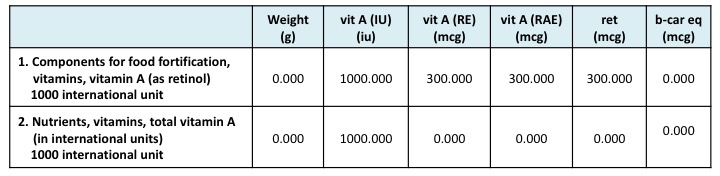
The NTRNs in the database were designed primarily for users who wish to create a User Recipe for a food for which nutrient values were determined by chemically analyzing the food in a laboratory setting. Beyond this intended use, the NTRNs have a limitation. The limitation is that NTRNS do not relate to any other nutrients or food components in the database. For example, if you add total protein to a User Recipe using the NTRN for protein, you are adding a specific amount of protein, but not adding calories or any of the individual amino acids associated with that protein.  Another example is the lack of relationship between different forms or units for a nutrient. For example, if the NTRN for vitamin A in International Units is used to add vitamin A to a food, the other forms of this nutrient (e.g. vitamin A in Retinol Activity Equivalents and Retinol Equivalents) are not added.


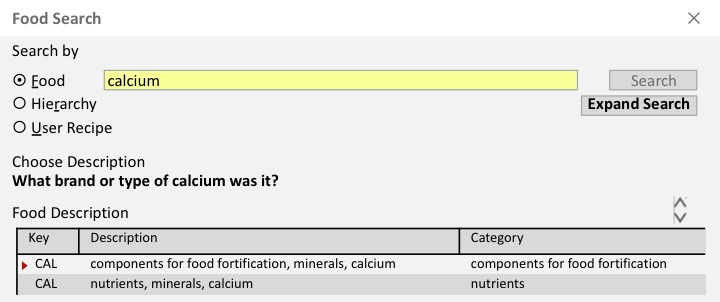
Please note that if you are trying to adjust the micronutrients of a food, you may want to use the components for food fortification in NDSR, which we refer to as SFORs.  For example, if you want to make a User Recipe for a food to better match a product label, you could start with an NDSR food that is a close match (e.g. Cheerios).  Then add or subtract one of the components for food fortification, such as calcium or vitamin C.   We also advise using SFORs with caution, especially when subtracting an amount, as the danger is a net negative value for the food.  However, the SFORs will more appropriately maintain their relationships with other nutrients in the database as shown below.

 
SFOR

The next image shows the difference between the SFOR calcium (first search result) and the NTRN calcium (second search result).

 
Food Search window

You are welcome to contact us with questions about the difference between using NTRNs and SFORs and what might be best for your work.  Contact us at NDSRhelp@umn.edu.

NCC News Bite – May 2025

Fresh artichokes stacked in a basket


This edition contains the following articles:


Baby Foods and Infant Formulas Updated for NDSR 2025!
 

The NCC database team has been hard at work updating the baby foods and infant formulas that will be represented in NDSR 2025 and the 2025 database files! Over 200 new baby food products have been added to our database, providing new selections for multiple categories such as meals, finger foods, and fruit and veggie squeeze pouches.  Baby food products that were in the database that are no longer available in the marketplace have been deactivated to make the searching process more efficient.


Users can expect to see updated selections for the following popular baby food brands:

 
  • Beech-Nut
  • Earth’s Best Organic
  • Gerber
  • Happy Family Brands (Happy Baby and Happy Tot)
  • Mum-Mum
  • Store Brand (e.g. Parent’s Choice)
  • Plum Organics
 

Infant formulas produced by Gerber and Mead Johnson have also been reviewed and updated to ensure nutrient accuracy and alignment with the current market.


These are only some of the updates that have been made for the upcoming version of NDSR! Stay tuned for more sneak previews in our next newsletter.


As a reminder, the latest version of NDSR is included as a component of your annual NDSR support. Any clients with up-to-date support at the time of the NDSR 2025 release will receive access to the updated software. Not sure of your support status or want to reinstate your support for another year? Send us an email at NDSRHelp@umn.edu to learn more!

 
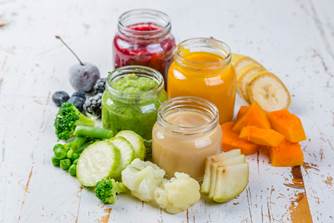
baby food jars

Sample Data Analysis Plan Now Available on Website
 

Last year we added new pages to the NCC website to help orient you and your analyst to the content of NDSR Output Files.  Now, we have added an example of an analysis plan that can help you think through how you might develop your own analysis plan. We encourage researchers to develop an analysis plan for their specific diet-related research questions because the plan will help you identify the specific NDSR output files you need and the variables you may need to create from the data in these files.  This plan is shared courtesy of Lisa Chow, MD, MS at the University of Minnesota Medical School. Results from the study were published in this article:


Oldenburg, Niki, et al.”Time-restricted eating, caloric reduction, and unrestricted eating effects on weight and metabolism: a randomized trial.” Obesity (2025)

 
computer and charts

Please Complete the 2025 Client Survey
 

We are conducting a Client Survey and would love to hear from you.  If you haven’t already, please take our brief survey.  We are interested in hearing from NDSR Users and those licensing our NCC Food and Nutrient Database Files as well.  To those of you who have already responded, thank you very much!

 
keyboard keys with emojis

No Price Increase for NDSR Software Licensing for July 2025-June 2026
 

Current prices for NDSR software licensing and annual support will remain the same through June 2026. The NCC price list is available here.

 
calculator and money

New Foods
 

The following new foods are available with this edition of the NCC News Bite. A New Foods Backup File is available for download on our website under New Food Backup Files, “May 2025”.

 
  • Buffalo Wild Wings Traditional Wings
  • Cambrooke Low Protein Homestyle Bread
  • Ferrero Rocher Candy
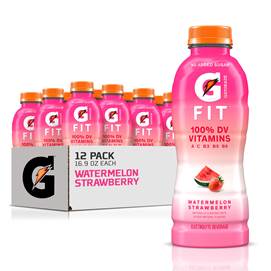
  • Gatorade Fit – Watermelon Strawberry
  • Kraft Cheddar Style Not Cheese Plant Based Slices
  • Madegood Granola Bar – Vanilla Drizzled
  • Pure Protein Bar – Chewy Chocolate Chip
  • Udi’s Gluten Free Hamburger Bun
 
FIT 12 pack bottles

NCC News Bite – February 2025

cocoa

This edition contains the following articles:


Sample Food Record Form Now Available


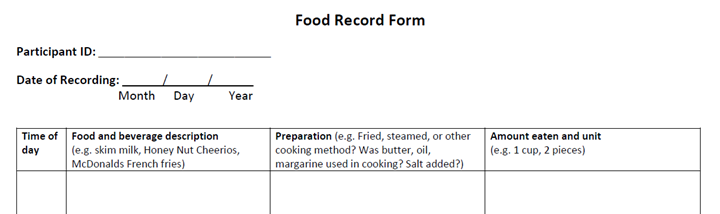
As you may know, we have sample 24-hour dietary recall collection procedures on our Dietary Assessment Resources page that you may use as a starting point for your protocol development. We recently added a Sample Food Record Form in response to requests from clients for this type of resource. Both are general guidelines and should be tailored to fit each particular study’s needs. We hope these resources help you as you plan your upcoming studies.

 
webinar

Updated: Guidelines for Resolving Missing Foods


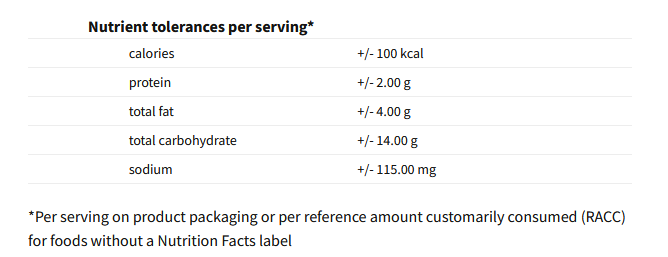
The NCC Food and Nutrient Database is extensive, and our database scientists work steadfastly to add and update foods in our database for each release of NDSR. Nevertheless, due to the dynamic nature of the food marketplace and diversity of eating habits in the US, users may encounter “missing foods”, or foods reported by a study participant that cannot be found in the database. On our website are guidelines for resolving missing foods that may help you determine whether you want to resolve a missing food at your site or submit it to NCC as a New Food Request. Note that we’ve recently updated our suggested nutrient tolerances, including the suggestion that you compare nutrient values per serving instead of per 100 grams of product.

 
online training

Did You Know? There are SAS files available to support analysis of NDSR output file data


There are a number of additional files provided with the NDSR program that facilitate creating data files for analysis using SAS or Excel. The Additional Files folder is located in C:\Users\Public\Public Documents\NCC\NDSR 20YY\Additional Files.


In the ‘SAS Programs’ folder you will find files that help you create SAS data sets for all output files and for all record types. These files include code for assigning formats and labels to the SAS variables, and defining the relationships within a set of Output Files. They can be used as templates and modified according to your specific needs.


For instructions on how to create and view output files, see the section titled “Creating an Output File” in Chapter 8 of the NDSR User Manual.


For more details about the SAS program files and other “NDSR Additional Files” see Appendix 18 of the NDSR User Manual.

 
webinar

New Training Cancellation Policy


A cancellation policy for those registering for our NDSR Training Workshops is now in place. We now require that you cancel or reschedule at least 12 days in advance in order to avoid being charged the full workshop cost. Please email NDSRtraining@umn.edu if you need to reschedule or cancel your registration. Our next training workshops are scheduled for April 7-8 and June 9-10 and are held from 9am to 5pm Central Time. Registration for the April training workshop will close on March 26th, which is also the deadline for cancellation.

 
online training

NCC News Bite – December 2024

snowman cookies

This edition contains the following articles:


NCC Food and Nutrient Database being used for the Nutrition for Precision Health, powered by the All of Us Research Program


We know that a number of our clients are working on the NIH funded Nutrition for Precision Health (NPH) program, a groundbreaking project that will develop algorithms that predict individual responses to food and dietary patterns. The NCC Food and Nutrient database is being licensed for use in the NPH program, particularly for planning the menus for the controlled diets and for providing additional nutrients to the dietary recall data being collected using the Automated Self-Administered 24 recall (ASA24) dietary assessment tool. We’re proud to be providing food composition data to support this important research program.

 
Precision Health Logo


Did you know? List of foods unique to various eating traditions


NCC is committed to making NDSR a tool that supports equity and inclusion in nutrition research.  As resources have allowed, we have steadily worked to expand foods unique to various eating traditions included in our database.  Recently, we worked to add more foods unique to the eating traditions of Nigeria, Jamaica, Somalia, Haiti, and Hawaii.  Are you wondering if our database includes foods eaten by members of your study population? We have updated our list of foods unique to various eating traditions on our website, which you can view here.
 

Are there foods unique to the eating traditions of your study participants that you’d like to see added to NDSR? If so, please email us at NDSRhelp@umn.edu, and we will add them to our list of food requests.  You don’t need to wait for a client survey to let us know.  If you have funding for a special project and would like to partner with us to add a large number of foods unique to a certain eating tradition to our database, let us know!

 
Global Foods


NDSR licensing and annual support costs


We know many of you are pressed financially due to limited NIH grant support. Some have asked if we could lower our prices in consideration of the lean times researchers are facing, and some have asked us to give discounts for certain projects. We wish we could, but we aren’t able to lower pricing at this time or for the foreseeable future, and out of fairness to all our clients we do not provide discounts.


NCC began 50 years ago with NIH funding, and some funding was continued to partially support maintenance and enhancement of NDSR. In 2014 that NIH funding was discontinued. Since then, we have relied exclusively on NDSR licensing and annual support, database licensing, and grants to support our work. We are proud of the work we are able to do with a small team, and we look forward to continuing to support nutrition research in the years to come. In order to ensure that we can do this, we must charge for use of NDSR and the NCC Food and Nutrient Database.


We hope this information is useful to you in understanding NDSR licensing and annual support costs.

 
Balance


NDSR Training


The next NDSR Training Workshops are scheduled for January 13th and 14th, 2025 and mid-February, 2025 (exact dates TBD). Trainings are held via Zoom from 9am-5pm CT both days. Register here by January 1st if you are interested in the January training. The registration cutoff for the February training will be determined once the dates have been finalized. Space in the training workshops is limited and registration may close early if all seats fill before the cutoff date.

 
Training class


End-of-Year Holidays


NCC will be closed on December 24, 25, 26, and January 1st due to the University of Minnesota holidays. Please plan accordingly and check to see that you have access to any copies of NDSR you may want to use during that time. User Support services will not be available on those closure days to provide passwords or other troubleshooting support.

 
Happy Holidays

NCC News Bite – September 2024

Fruit basket


This edition contains the following articles:


Announcing: NDSR 2024 Now Available!


We are excited to announce that we released NDSR 2024 on Monday, July 29th!  The primary contact for accounts who are up to date on annual support should have received an email with a download link and instructions.  If you didn’t receive an email, contact NDSRhelp@umn.edu, and we can check on your account status for you.  To learn more about what is new in NDSR 2024, check out this article on our website.  Wondering if you should upgrade to NDSR 2024? This article we published last year may help you decide.


2024 balloons


Did You Know? NDSR Has New Customizable Meal and Food Fields


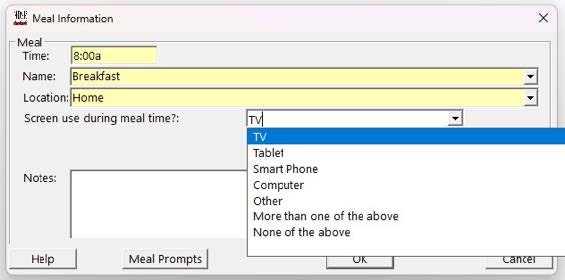
Researchers asked us for the ability to code additional details about meals and foods, and we have added them this year for NDSR 2024.  In recalls, records, and record-assisted recall projects, you can include up to three customizable fields at the Meal level, which will appear on the Meal Information window, and up to ten customizable fields at the Food level, which will appear on a new tab within the Food Detail window.   You can customize a descriptor for each field and import a list of response options that will then populate a dropdown menu.  There is information in Chapters 3 and 4 of the User Manual with more details for how to use these fields, and we’ve also recorded two short videos that demonstrate how to set up the fields.  If you are excited to use these customizable fields in your next project, share with other NDSR users on our LinkedIn Forum about how you plan to use them!


Meal level


HEI-2020 and HEI-Toddlers-2020


The working group tasked with updating the HEI to align with the 2020-2025 Dietary Guidelines for Americans determined that no changes to the index were required aside from updating the name to ‘HEI 2020’. You can use NDSR HEI 2015 output files for HEI 2020 scores for dietary intake data and/or menus in NDSR.  The HEI 2020 has the same index components and scoring criteria as the HEI 2015, so while the HEI output files and reports in NDSR are labeled as HEI 2015, they are the same as HEI 2020 scores.  


The new Healthy Eating Index-Toddlers-2020 (HEI-Toddlers-2020) has the same index components as the HEI-2020 for children and adults 2 years of age and above, but the standards for calculating the maximum and minimum HEI index component scores are different for the Toddler HEI. For example, the adult standard for the component score of Total Fruits ranges from no fruit to greater than or equal to 0.8 cup equivalents per 1000 kcals, while the toddler standard ranges from no fruit to greater than or equal to 0.7 cup equivalents per 1000 kcals. Therefore, you should not use the index component scores or total scores in the NDSR HEI 2015 output files.  However, you can use the contributing dietary constituents (e.g., ounce equivalents of whole grains, cup equivalents of dairy, etc.) found in the HEI output files to calculate component and total HEI-Toddlers-2020 scores. 


blueberries


Backup Files Are Gold!


Reminder: please remember to back up your NDSR projects to an additional storage medium outside of your local drive. Although NDSR protects data by saving record information to your hard drive or server as it is entered, NCC does not have access to that data and cannot retrieve your data in the event of a hard drive crash.  Therefore, it is very important to create a NDSR backup and data management plan. Frequent backup of projects to multiple locations (e.g., hard drive, network drive, flash drive, cloud storage, etc.) is recommended. More information on backing up your NDSR projects is available on the NCC website.


Gold

NCC News Bite – June 2024

salad

This edition contains the following articles:


NCC Forum Highlights


Last month, NCC launched a Nutrition Coordinating Center Forum on LinkedIn Groups to provide a place for NDSR Users and NCC Food and Nutrient Database clients/users to ask each other questions and share resources.  This is meant to facilitate user-to-user interaction. Technical help and licensing should continue to be sent to NDSRhelp@umn.edu.

In case you missed it, other NDSR users would love your input on these topics:

  • What are other researchers offering as financial incentives to participants for completing 24-hr dietary recalls?
  • How do you decide whether to build assembled foods or pick a database food for foods reported by individual participants?
  • When we send food homogenates of a full day’s menu to analytical labs such as Eurofins or Medallion, what analyses would yield the most appropriate results to compare with our NDSR calculated values?

Want to make sure you get notifications about new posts in the forum? Follow these steps:

  1. On your Personal LinkedIn Page, click “Notifications” on the top menu bar.
  2. Select “View Settings” under Manage Your Notifications.
  3. Under Notifications you receive, click “Groups”.
  4. Select “Groups Updates”.
  5. Set Email sent on your primary email to ON.
people


Did You Know? Featuring: NDSR View and Paste Ingredients Function


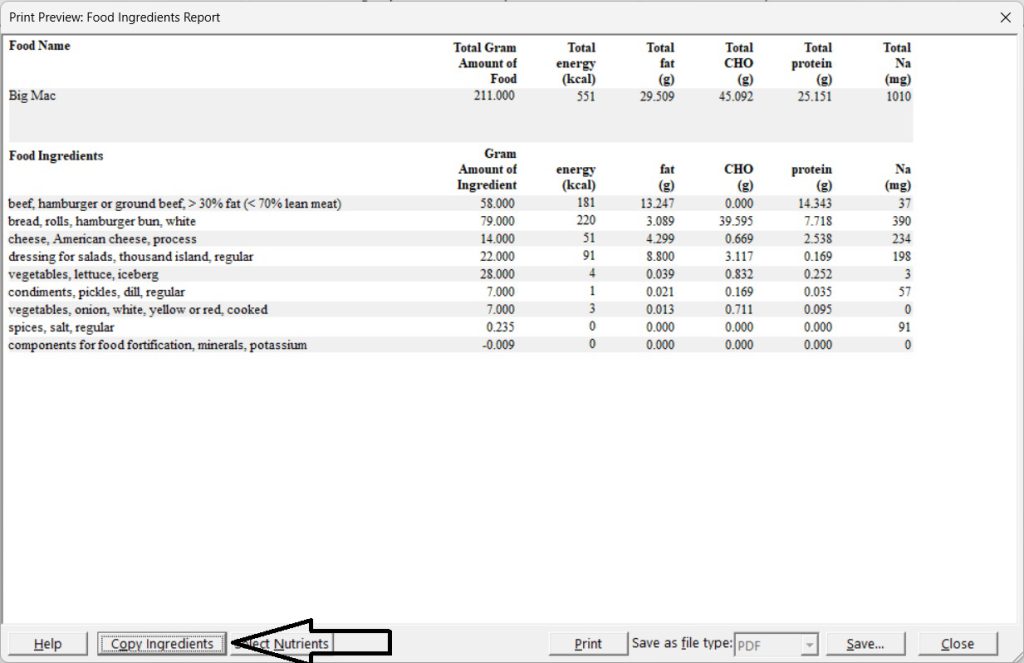
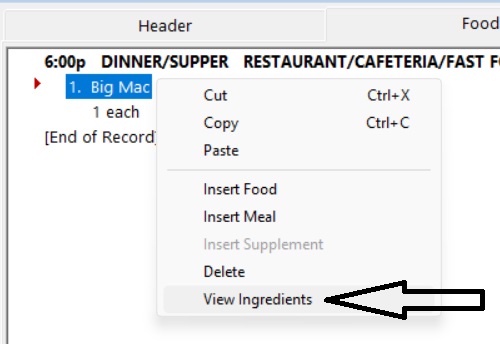
Many of our users are familiar with the View Ingredients function that allows you to view gram amounts and up to five nutrients for each ingredient in many multi-ingredient foods in the database.  What you may not know is that you can copy the ingredients list and paste the ingredients with amounts into an assembled food, and then edit ingredients and/or amounts to better match the food reported by a participant.  For example, if a participant had a Big Mac but scraped off the sauce and the cheese, you could use the Paste Ingredients function to paste the ingredients of the Big Mac into an Assembled Food, and then delete the sauce and the cheese.


Please note that the Paste Ingredients function should be used with discretion, in a way that best aligns with your particular study.  Removing high fat/energy ingredients such as sauce and cheese from a Big Mac may be important.  Removing a tiny amount of onions from the Big Mac may or may not be important.  Consider your research questions and the time burden before using this feature liberally.


Want more information about how to use the View and Paste Ingredient functions?  See User Manual Chapter 4 and three short tutorial videos on line.


view ingredients


copy ingredients


NCC Associate Director Dr. Abby Johnson at Nutrition 2024


NCC Associate Director Dr. Abby Johnson will be at the American Society for Nutrition’s annual Nutrition 2024 conference in Chicago, IL. If you are planning to attend, consider going to her presentation “Development of a Method to Identify the MyPlate Food Groups for Plant-Based Alternative Products” on Sunday, June 30th during the 2:30pm session in the Nutrition Translation and Food Science Oral Session 15.


Nutrition conference logo


NCC Presentations from the National Nutrient Databank Conference


NCC Director Dr. Lisa Harnack and Database Scientist Jenny Stevenson enjoyed seeing many NDSR Users at the National Nutrient Databank Conference last month in Ottawa, Canada. Summaries of the two oral presentations delivered by Dr. Lisa Harnack—”Plant-based Milk Alternative Products are Highly Heterogeneous in Nutrient Composition” and “Snack and Meal Replacement Bars Available in the U.S. Marketplace are Heterogeneous in Macronutrient Content” are shown below.


NNDC logo
 

Plant-Based Milk Alternative Products are Highly Heterogeneous in Nutrient Composition

Abigail Johnson, PhD, RD, Jennifer Stevenson, Janet Pettit, Bhaskarani Jasthi, PhD, RD, LD, Lisa Harnack, DrPH, RD. University of Minnesota Nutrition Coordinating Center


Background: The variability of nutrients in plant-based milk alternative (PBMA) products is not well documented, leaving gaps in understanding how to assess nutrient intake from PBMA in nutrition research and surveillance.

Methods: In 2022 University of Minnesota Nutrition Coordinating Center (NCC) database scientists identified leading brands of PBMA products available in the U.S. market. A formulation was created for each product from which composition values for the 175 nutrient, nutrient ratios and other food components were calculated. An internally developed program was used to create the formulations, with product ingredient and nutrition facts panel information key to deriving formulations. We compared nutrient variability within and across plant-base types for calcium, vitamin D, and vitamin A as % Daily Values (%DV) per serving. We limited our analysis to products (total n=196) made with almond (n = 61), cashew (n = 3), coconut (n = 21), hemp (n = 10), oat (n = 51), pea (n = 9), rice (n = 10), or soy (n = 31).

Results: We identified high nutrient variability between and within categories of PBMAs. Nutrient ranges were wide. For calcium, oat milks had the widest range (0 to 45%DV). For vitamin D, soy milks had the widest range (0 to 30%DV). For vitamin A, both almond and soy milks ranged from 0 to 40%DV. Nutrients were not normally distributed within each plant base category, instead bimodal and trimodal distributions were observed.

Significance: The source of nutrient variability between and within PBMA categories may be due to differences in fortification, with distribution modes occurring at common nutrient reporting thresholds (e.g., 10% and 20% DV). For researchers aiming to collect dietary intake information from populations consuming PBMA, this high variability underscores the need to record specific brand and plant-base information.


Snack and Meal Replacement Bars Available in the U.S. Marketplace are Heterogeneous in Macronutrient

Lisa Harnack, DrPH, RD, Abigail Johnson, PhD, RD, Janet Pettit, Jennifer Stevenson, Kristine Schmitz, Bhaskarani Jasthi, PhD, RD, LD. University of Minnesota Nutrition Coordinating Center


Objective: Evaluate the macronutrient content variability of snack and meal replacement bars for the purpose of determining whether a representative macronutrient profile across this product category may be acceptable in developing food frequency questionnaires (FFQs) and their accompanying food and nutrient databases.

Materials and Methods: The 2022 version of the University of Minnesota Nutrition Coordinating Center Food and Nutrient Database was used to describe the macronutrient content of 588 snack and meal replacement bars sold by 33 leading brands in the U.S. The median, minimum, maximum, and interquartile range (IQR) values per bar were calculated across all products and by product type.

Results: Energy and macronutrient content varied widely across all products. For example, the added sugar content per bar ranged from 0-31 g with a median value of 6 g and IQR of 8 g. Macronutrient content differed between products described as ‘protein/meat’ or ‘meal replacement’ in comparison to those described as ‘child’/kid’ (n=45) or lacking a specific descriptor. For example, the median protein content per bar was 13 g for protein/meat and meal replacement bars versus 2 g and 4 g for child/kid bars and those lacking a specific descriptor. Macronutrient content varied substantially within these product categories as well. For example, protein/meat bars had variable protein (median 13 g; IQR 10 g), saturated fat (median 3 g DV; IQR 3 g) and added sugar (median 4 g; IQR 7) content.

Significance: When developing a FFQ and accompanying food and nutrient database for use with a population where snack or meal replacement bar consumption is common, consideration should be given to asking for the specific brand of snack or meal replacement bar typically eaten. Alternatively, the type of bar (protein, meal replacement, or other type) could be queried with representative nutrient values included in the FFQ database.

NCC News Bite – April 2024

Tulips

This edition contains the following articles:


Introducing the Nutrition Coordinating Center Forum


We know the users of NDSR and the NCC Database have knowledge and valuable experience to share. That’s why we’re taking our community-building to a new level with the introduction of the Nutrition Coordinating Center Forum, a LinkedIn group where users can virtually meet and learn from one another’s experiences with the NDSR software and NCC Database files. The NCC Forum is an additional channel we are hosting to help foster connection within our community. It is NOT replacing the NCC website, ndsrhelp@umn.edu, or NCC News Bites.


The NCC forum is powered by you, our community. Please help make it a valuable place to share knowledge, skills, experience, and tips with one another through ongoing discussion.


For example, the NCC forum is a great place to:

  • Chat with the community and share your NDSR experiences.
  • Search past discussions for ideas and insights.
  • Discuss features, protocols, and analysis plans.


You will need to create a LinkedIn account, if you do not already have one, to view or add posts and replies to the NCC Forum.


Then go to the Nutrition Coordinating Center Forum and click on the JOIN button. 


All requests to join and all new posts require NCC approval, which may take up to 1 business day.


Your participation counts – join today to connect, share, and learn.


people


Fish Tacos, Jimmy John’s and more coming in NDSR 2024


Our database team has been working hard, as they do every year, to update the NCC Food and Nutrient Database that will be a part of NDSR 2024.  To highlight some of the many changes:


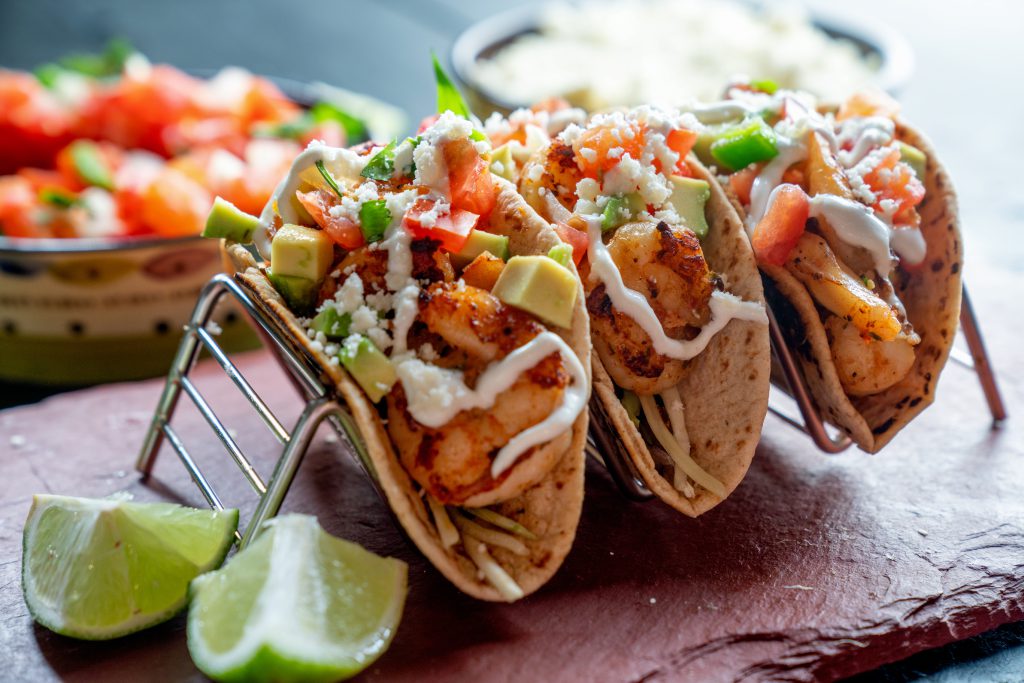
  • Fish tacos with cabbage have been added, and taco options restructured
  • Jimmy John’s has been added to our Fast Food restaurants
  • More foods unique to Hawaiian eating traditions have been added
  • Artificial sweeteners and sugar substitutes have been updated
  • Crackers have been updated
  • Aguas frescas flavors have been expanded based on specific requests submitted through our client survey
  • Arugula has been added as a variable ingredient option in salads
  • Thousands of small yet important changes to nutrient values for foods have been made based on recent data from the USDA Foundation Foods Database and the Food and Nutrient Database for Dietary Studies (FNDDS) 2019-2020


We are excited to release the new database with NDSR 2024 this summer.


fish tacos


NCC at the National Nutrient Databank Conference


NCC Director Dr. Lisa Harnack, and Database Scientist Jenny Stevenson will be representing NCC at the National Nutrient Databank Conference from May 21-23, 2024 in Ottawa, Canada and would welcome the opportunity to talk with you while you are there.  Dr. Harnack will also be giving two oral presentations—”Plant-based milk alternative products are highly heterogeneous in nutrient composition” and “Snack and Meal Replacement Bars Available in the U.S. Marketplace are Heterogeneous in Macronutrient Content”.
 

NNDC logo


In Memory of Mary Stevens


Those of you who have been in touch with NCC for a while may remember Mary Stevens who was the NCC Service Center Manager until she retired in 2011.  We are sad to share that she passed away on February 11th and a funeral was held in March. Her obituary is available at this link.  As Service Center Manager Mary facilitated dietary data collection and quality assurance work for countless studies, including complex important studies such as the Hispanic Community Health Study/Study of Latinos, INTERMAP, and the Primary Prevention of Obesity in North American Indians Study (Pathways). Mary put her all into supporting high quality dietary intake assessment for every project. She had the unique ability to work collaboratively to figure out solutions to practically any dietary assessment need or problem that arose. Also, she was a delightful person to work with. We remember Mary and honor all of her contributions to supporting nutrition research.


Mary Stevens


Price Increases Coming July 2024


Effective July 1, 2024, licensing and annual support fees will increase by 2% in order to keep pace, in part, with current inflationary increases in expenses. The new pricing for NDSR licensing is as follows:


NDSR License – Initial Copy: $6,600 (increase of $120)

NDSR License – Additional Copy: $4,285 (increase of $85)

Annual Support – Initial Copy: $4,400 (increase of $85)

Annual Support – Additional Copy: $700 (increase of $15)


Note that a reinstatement fee applies for returning clients who have not maintained annual support.


Contact the NCC User Support team for any additional questions.


July 1


Email subject line:

News Bite: Announcing the NEW NCC Forum, plus Fish Tacos

NCC News Bite | February 2024

oranges

This edition contains the following articles:


NEW- Website Pages to Orient You and Your Analyst to the Content of NDSR Output Files


We know that the wealth of data available in the many NDSR output files may appear daunting or confusing at first. Chapter 8 of the NDSR User Manual provides an overview of NDSR output and File Specifications. However, those who haven’t analyzed dietary data before may need more help in getting started. To meet this need, we have added a new section to our website to provide an orientation to the content of the NDSR output files.  In addition to providing an easy-to-understand description of the content of output files, helpful tips are included along with answers to many common questions about data in the output files. We hope you find this useful, and we welcome ideas for improving this new website content.


orientation


Coming in NDSR 2024: The Ability to Include Customized Data Fields at The Meal and Food Levels!


For many years NDSR clients have asked us for a feature that would allow for the inclusion of customized data fields at the meal- and food- levels so that aspects of the meal and food not captured by the standard NDSR prompts may be coded. Examples of meal-level information that clients have been interested in documenting include who served the meal to the child, whether the meal was from a certain fast food restaurant, eating companions present at the meal, and screen use during the meal. Examples of food-level information of interest to clients have included documenting food attributes (organic, packaging type), food source, and study-specific food groups.


How will this new feature work? In recalls, records, and record-assisted recall projects, you can use up to three customizable fields at the Meal level, which will appear on the Meal Information window, and up to ten customizable fields at the Food level, which will appear on a new tab within the Food Detail window.   You will be able to customize a descriptor for each field and import a list of response options that will then populate a dropdown menu.


This feature is still in the development and testing stages, so the final design may vary, but below is a screen shot of how a customizable field could appear at the meal level.


custom fields


Registration for the National Nutrient Databank Conference is Now Open!


Registration is now open for the 43rd National Nutrient Databank Conference, which is being held in Ottawa, Canada on May 21-23, 2024.  The Early Bird registration discount ends on March 16th.   NCC Director Dr. Lisa Harnack, and Database Scientist Jenny Stevenson will be there representing NCC and would welcome the opportunity to talk with you while you are there.


register now


NCC Celebrates 50 Years of Supporting Nutrition Research


It’s NCC’s 50th Anniversary! We are making plans to celebrate throughout the year and one of our goals is to better document our history.  We are seeking your stories about NCC and how NDSR has served you.  If you have something to share, please email NDSRhelp@umn.edu.


50 year cake


New Foods


The following new foods are available with this edition of the NCC News Bite.  A New Foods Backup File is available for download on our website under New Food Backup Files, “February 2024”.

 

  • Beyond Meat Plant Based Jerky
  • Bobo’s Oat Bar – Peanut Butter Chocolate Chip
  • Fiber One Bar – Strawberry Cheesecake
  • La Banderita Carb Counter Low Carb Tortilla
  • Orgain 30g Protein Shake – Chocolate Fudge
  • Pediasure 1.5
  • Quest Cheddar Blast Cheese Crackers
  • Violife Vegan Cheese – Just Like Cheddar Slices


Tortillas