
This edition contains the following articles:
NDSR 2026 and 2026 NCC Food and Nutrient Database Files Now Available!
NCC is proud to announce the official release of NDSR 2026 and the 2026 NCC Food and Nutrient Database files! The newest release includes updates to soups, chips and other snack foods, and Enfamil and store brand infant formulas. We’ve added over 500 new snack products and updated more than 400 snack products that were already present in the database. In addition to expanding our selection of snack foods, we’ve added highly-requested items such as Biscoff cookies, matcha, macchiato, flax seed meal, and liquid aminos (both coconut and soy based).
In response to many requests, NDSR software users will find that we have added a new HEI output file to NDSR 2026 that provides HEI total and component scores per person. Output file 25 is a per-person HEI output file for which one HEI Total score and one set of component scores are calculated for the records with the same ID within a project.
If you’d like to know more about what NDSR 2026 and the 2026 NCC Food and Nutrient Database files have to offer, we invite you to check out the full list on our website.
As a reminder, the latest version of NDSR is included as a component of your annual NDSR support. Any clients with up-to-date support at the time of the NDSR 2026 release were provided access to the updated software via direct email to the account’s Primary Contact (emails were sent 7/23/2026). Not sure of your support status or want to reinstate your support for another year? Send us an email at NDSRhelp@umn.edu to learn more.
For our NCC Food and Nutrient Database Licensing clients, those with an agreement that includes the 2026 files have been sent a Google Drive link to the files. If your data use agreement is no longer active or does not include the 2026 files and you’d like to receive the files, or if you have any questions, please contact us at NDSRhelp@umn.edu.

Recent Updates to NCC Staffing
The NCC team is still small but mighty! We’ve recently celebrated a retirement and welcomed a new Full-Time employee.
Our longtime Database Manager, Janet Pettit, retired at the beginning of May. Janet was a member of NCC since 1985 and had been serving as our Database Manager for over 30 years. She was instrumental in the development and maintenance of the NCC Food and Nutrient Database that is found in the NDSR software and is also licensed separately. We will miss her at NCC, and wish her health, happiness, and relaxation in her retirement! We are glad to announce that Database Scientist Jenny Stevenson is taking over Janet’s role as our new Food and Nutrition Database Manager beginning August 10th.
We are happy to introduce you to our newest member of NCC, Lindsey Ahlert, MS, RD, LD who we hired earlier this year as a Database Scientist. She has joined the database group in updating and maintaining the NCC Food and Nutrient Database using information from a variety of sources to ensure the database remains accurate, comprehensive, and current..
If you would like to learn more about the people behind your favorite dietary analysis software, we invite you to Meet the Team in the About NCC section of our website.
Participant ID Format Suggestions
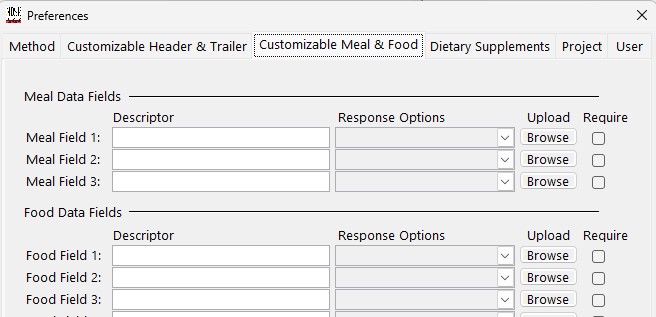
A client recently reported that Participant IDs entered into NDSR were appearing as dates in their output file. We looked into this and confirmed that while the Participant IDs are being written correctly to the output file (.txt format), Excel was reformatting the IDs to a date abbreviation format. This is a function of Excel, and we have some tips for how to avoid this if you are going to be viewing your data in Excel. Formats including a dash are more likely to result in Excel reformatting the data to a date. For example, ‘1-25’ and ‘01-16’ may be reformatted to ‘25-Jan’ or ‘16-Jan’, respectively. Instead of a dash, consider using a dot or a letter such as ‘x’ if you need to visually separate numbers in your participant ID.
Please reach out to NDSRhelp@umn.edu with questions

Update: Using NDSR Output Files to Calculate the HEI-2020-Toddler Score
In a previous News Bite we let you know that you can use variables in the HEI-2015 output files generated by NDSR to calculate the Healthy Eating Index-Toddlers-2020 (HEI-2020-Toddler Score). This is still accurate, but we would like to point out that an additional step may be needed in the process. The HEI-2020-Toddler score is meant to be calculated on food and beverage intake, exclusive of human milk and infant formulas. If the toddlers in your data set consumed human milk and/or infant formula, entries of those foods should be removed from the NDSR record prior to generating the HEI-2015 output files to be used for calculating the HEI-2020-Toddler Score. If your only outcome is the HEI-Toddler score, you could simply remove, or not enter the human milk and infant formula in NDSR. If you are looking at nutrients, other food components, and food grouping and want to include human milk and infant formula in those calculations, then you could make a copy of your data before removing the human milk and infant formula, so you could generate output from the data with these components and then generate another set of output without them.
How do I calculate HEI-2020-Toddler Scores using-output file 23 generated on data without human milk or infant formula included?
The new Healthy Eating Index-Toddlers-2020 (HEI-Toddlers-2020) has the same index components as the HEI-2020 for children and adults 2 years of age and above, but the standards for calculating the maximum and minimum HEI index component scores are different for the Toddler HEI. For example, the adult standard for the component score of Total Fruits ranges from no fruit to greater than or equal to 0.8 cup equivalents per 1000 kcals, while the toddler standard ranges from no fruit to greater than or equal to 0.7 cup equivalents per 1000 kcals. Therefore, you should not use the index component scores or total scores in the NDSR HEI 2015 output files. However, you can use the contributing dietary constituents (e.g., ounce equivalents of whole grains, cup equivalents of dairy, etc.) found in the HEI output files to calculate component and total HEI-Toddlers-2020 scores using the toddler specific standards.
NDSR Training and Certification
Pricing for NDSR Training and Certification will remain the same for the 2027 Fiscal Year for those outside of the University of Minnesota. (Pricing for U of M trainees has been increased by only $5.)
Training is available through three access tiers that will allow you to better tailor the material (and the associated cost) to your needs—an asynchronous training course, a four-hour live interviewer group practice workshop, and individualized feedback through certification. Each successive tier builds upon the content learned in the previous tier and will allow greater flexibility to complete the materials at your own pace than our prior two-day workshop format. Participants in the asynchronous course receive access to the material for a period of two weeks and you can sign up for this course at any time.
Our next Live Interview Practice Workshops are scheduled to take place from 12-4p CST on September 29th and November 17th. Registration will close two weeks before each respective session date. If you would like to participate in a live practice workshop, you must complete all asynchronous course content in advance of the session date. Completion of a Live Interview Practice Workshop is required prior to beginning any certification activities.
If you would like to learn more about NDSR Training and Certification or would like to register for any of our training activities, please visit our website. For questions, please contact NDSRtraining@umn.edu and we will be happy to assist you.